Plain-English answers to the questions homeowners, buyers and developers ask us most — identification, the law, mortgages, cost and treatment. If yours isn't here, give us a call.
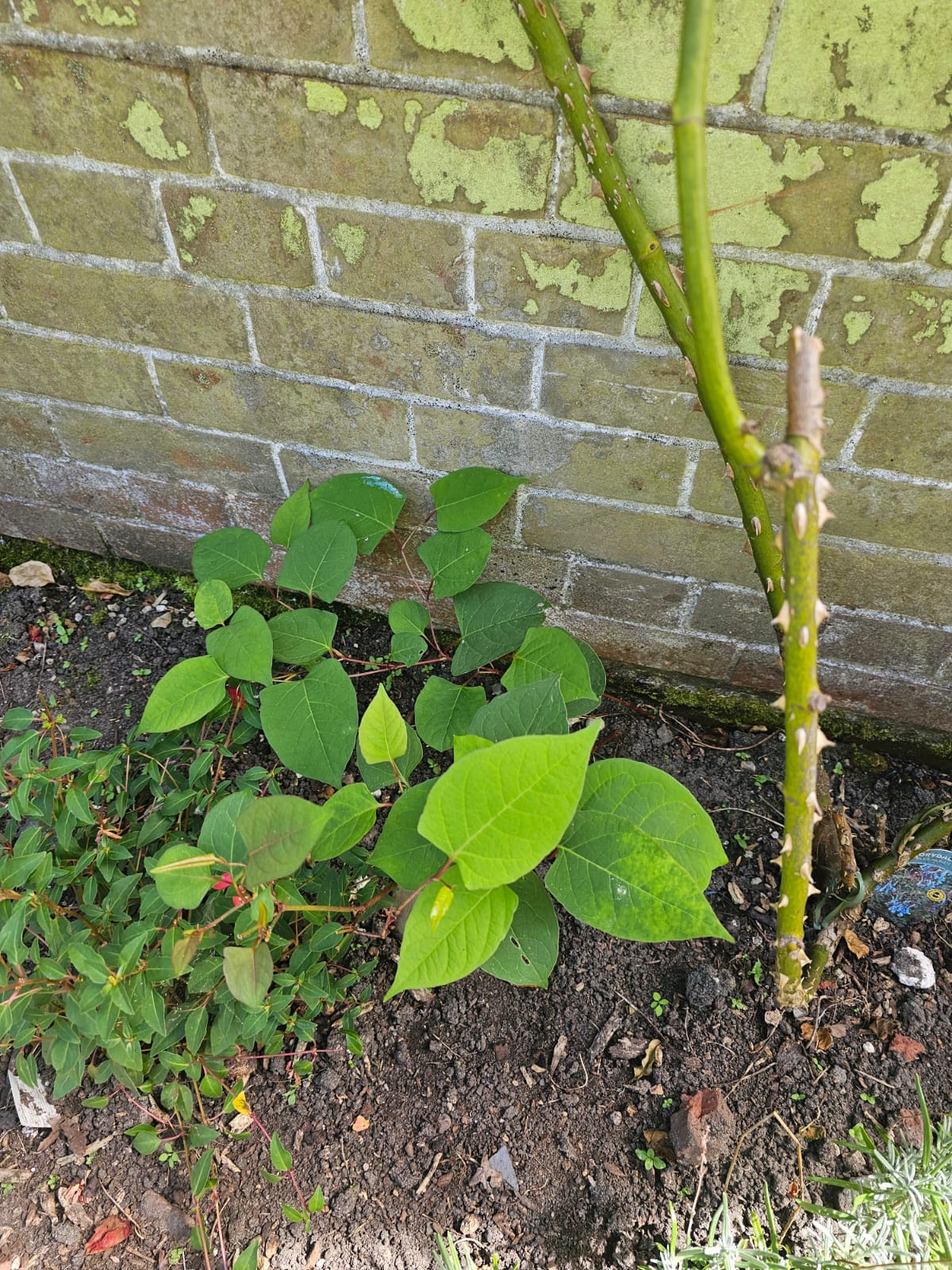
Look for bamboo-like hollow stems with purple speckles, shield- or heart-shaped leaves arranged in a zig-zag pattern along the stem, and creamy-white flower tassels in late summer. In spring, red/purple asparagus-like shoots emerge from the ground. If you're unsure, send us photos — we'll tell you within 24 hours.
Mature foliage — note the shovel-shaped leaves alternating along a zig-zag cane.
02
Is it really a problem?
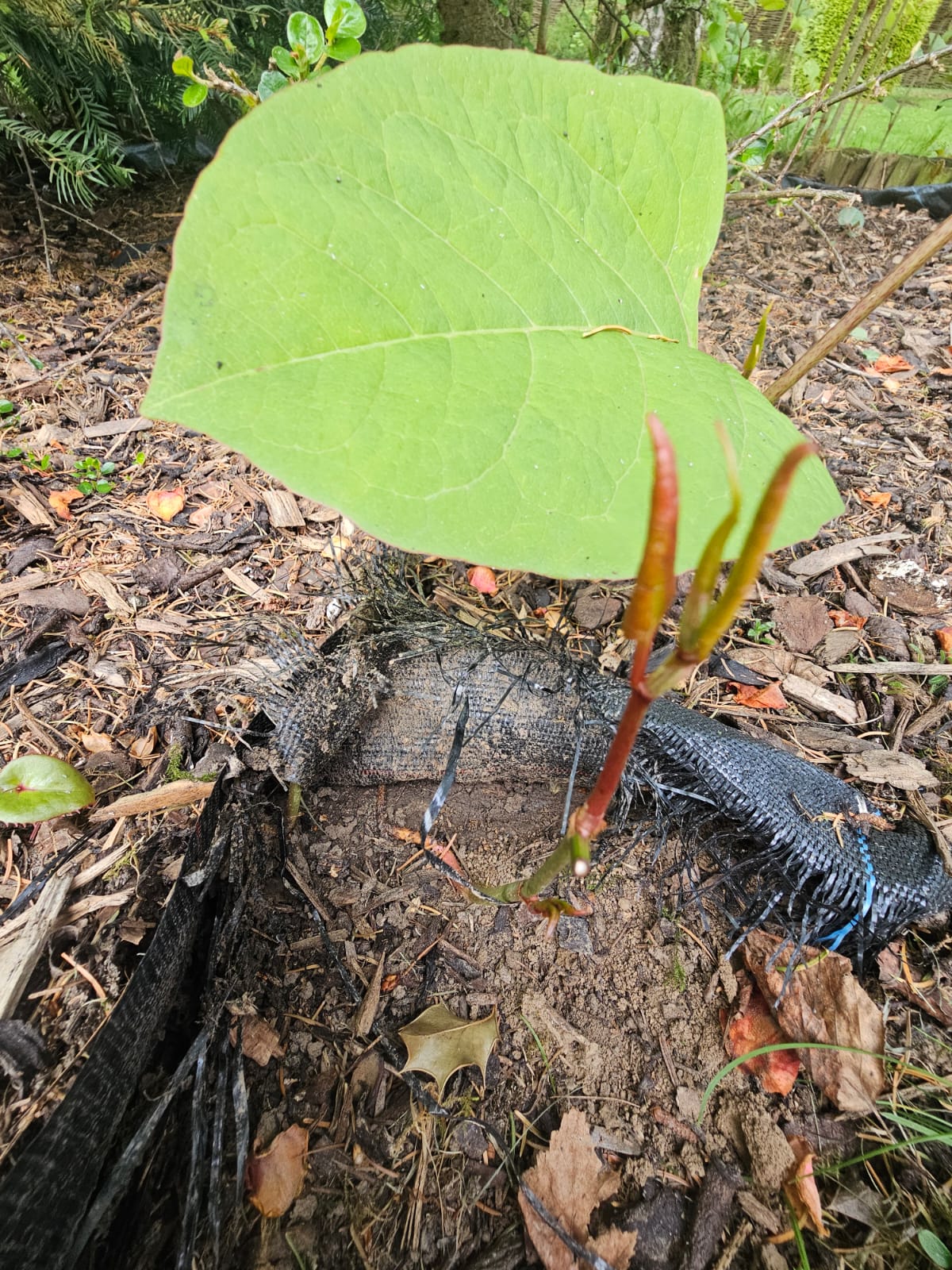
Yes, but it's not the end of the world. Knotweed rhizomes can travel several metres through soil and exploit cracks in tarmac and masonry. Most lenders won't lend without a treatment plan in place. Untreated, it spreads — and the longer you leave it, the more expensive it becomes.
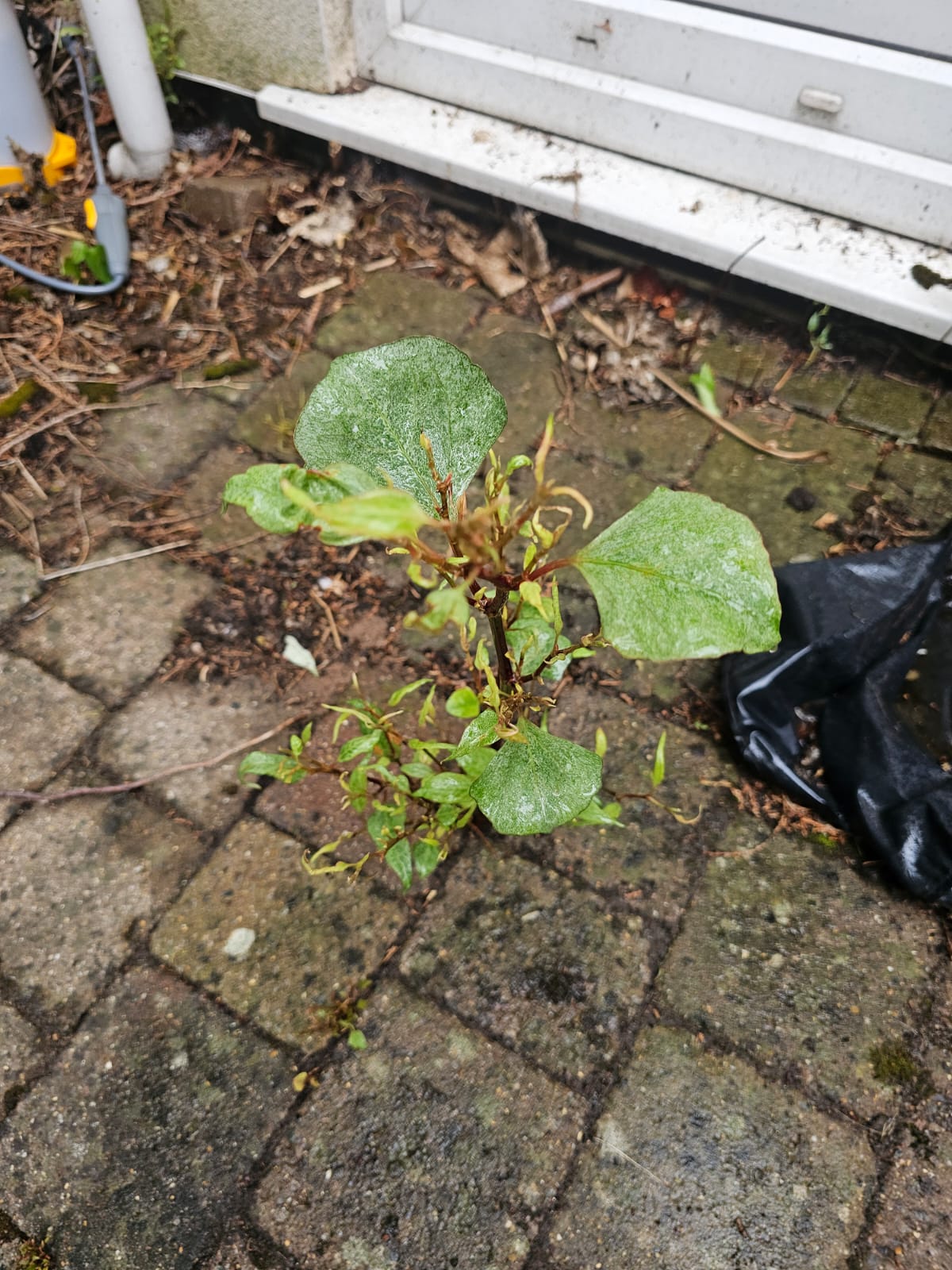
Regrowth straight through a landscape membrane — barriers alone do not stop rhizome.
03
What does the law say?
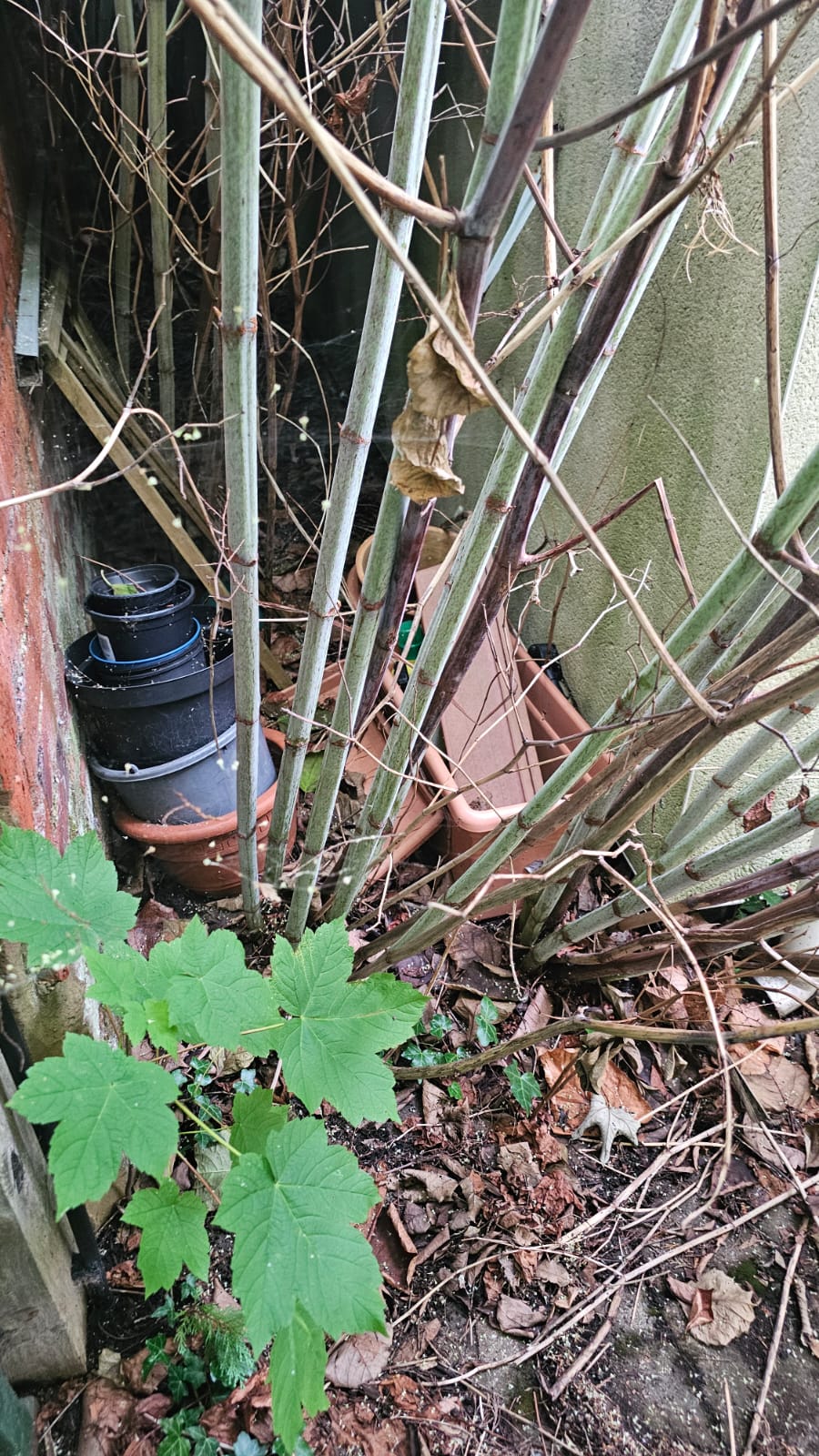
It's not illegal to have knotweed on your land, but it IS an offence to allow it to spread onto neighbouring property under the Wildlife and Countryside Act 1981. You also have a duty to disclose it when selling a property (TA6 form). Soil containing knotweed is classified as controlled waste.
A typical encroachment case — neighbour disputes often start here.
04
Will it stop my mortgage?
Not necessarily. Most major UK lenders will lend on a property with knotweed provided there is a professional, documented treatment plan in place. The survey and Knotweed Management Plan we provide are written to lender-accepted standards and designed to satisfy lender requirements. We do not sell insurance-backed guarantees — in our experience the premiums rarely represent value for the homeowner.
05
How is it treated?
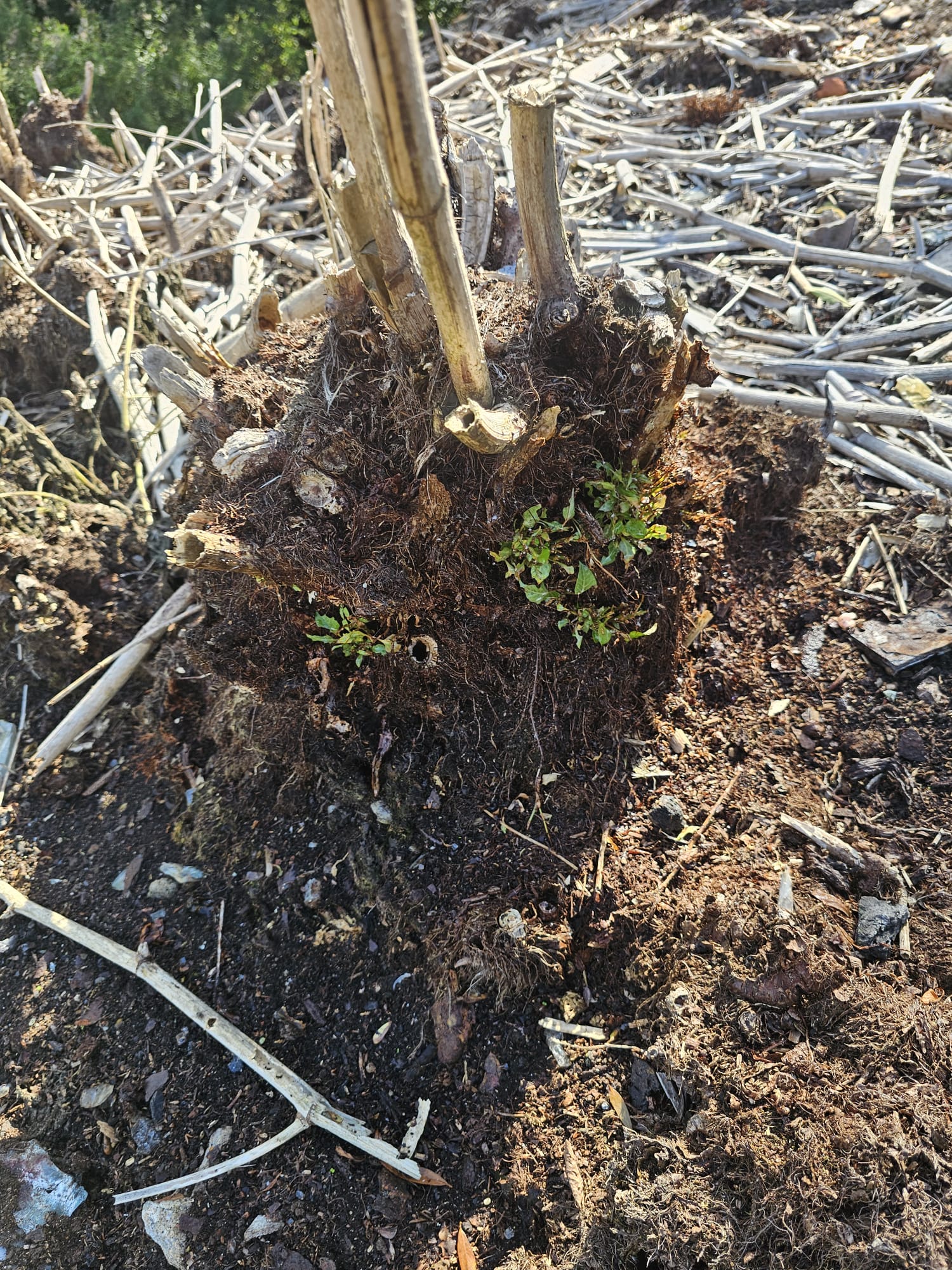
There are two broad approaches: herbicide treatment (cheaper, slower — typically 3–5 years of foliar spray or stem injection), and excavation (faster, more expensive — physically removing the rhizome from site, or burying it in a licensed on-site cell). The right choice depends on your timeframe and what you're doing with the site.
Excavation is the fastest route when a build or sale deadline is in play.
06
How much does it cost?
It depends on the size of the infestation and the chosen method. A domestic herbicide programme might be a few hundred pounds per visit; a full excavation on a development site can run into the tens of thousands. We provide written, no-obligation quotes after a site visit.
07
Can I treat it myself?
Technically yes, with consumer-grade glyphosate — but it's slow, easy to spread accidentally, and won't satisfy a lender. Soil disposal is regulated and DIY excavation can make the problem worse. For anything affecting a sale, a mortgage or a build, use a qualified specialist.
Foliar response to a properly-timed herbicide programme.
Still not sure?
Send a few photos with your postcode. We'll identify it for free.